


Dell PowerEdge R760 vs HPE ProLiant DL380 Gen11: Which 2U Rack Server Offers Better Value for Enterprises in 2026?
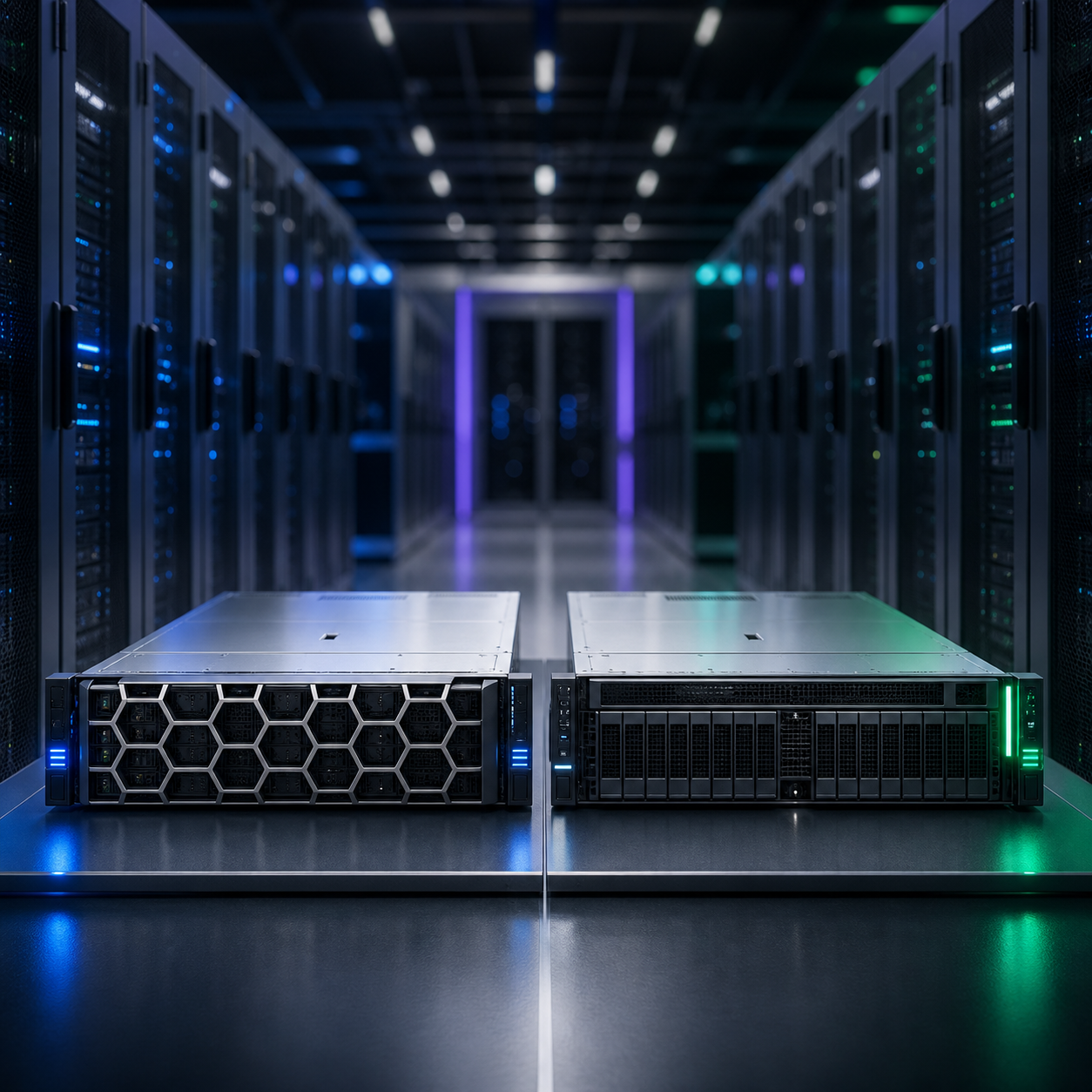
If your organization is planning to upgrade its 2U rack server infrastructure in 2026, two models will almost certainly appear on the shortlist: the Dell PowerEdge R760 and the HPE ProLiant DL380 Gen11.
Both platforms support modern enterprise workloads, including virtualization, database systems, analytics, private cloud, and AI-assisted computing. Both also support 4th and 5th Generation Intel Xeon Scalable processors, DDR5 memory, PCIe Gen5 expansion, and flexible storage configurations.
The real difference is not simply raw performance. For many enterprises, the decision comes down to management efficiency, security architecture, operational familiarity, and long-term support model.
Key Specification Comparison
| Feature | Dell PowerEdge R760 | HPE ProLiant DL380 Gen11 |
|---|---|---|
| Form Factor | 2U rack server | 2U rack server |
| Processor | Up to 2x Intel Xeon Scalable processors, 4th or 5th Gen depending on configuration | Up to 2x Intel Xeon Scalable processors, 4th or 5th Gen depending on configuration |
| Memory | 32 DDR5 DIMM slots, up to 8TB RDIMM | 32 DDR5 DIMM slots, up to 8TB RDIMM on supported configurations |
| Storage | Flexible front-bay options including SAS, SATA, and NVMe drives | Flexible SFF and EDSFF options including SAS, SATA, and NVMe drives |
| Remote Management | iDRAC9 with OpenManage Enterprise integration | HPE iLO 6 with HPE management ecosystem integration |
| Security Focus | Cyber Resilient Architecture, System Lockdown, firmware integrity controls | Silicon Root of Trust, secure firmware validation, recovery-oriented protection |
| Best Fit | Data center scaling, virtualization, admin-friendly lifecycle management | Enterprise core workloads, security-sensitive environments, deep hardware telemetry |
Actual capacity varies by processor, chassis, riser, drive cage, GPU, memory, and service configuration. Before purchasing, organizations should validate the exact bill of materials against the intended workload.
1. Management Efficiency
Dell PowerEdge R760: Dell’s key strength is iDRAC9 and OpenManage Enterprise. For IT teams managing many servers, the ability to monitor, update firmware, manage alerts, and standardize configuration through a familiar interface can significantly reduce administrative workload.
HPE ProLiant DL380 Gen11: HPE’s iLO 6 is designed for detailed server health monitoring, power visibility, firmware-level insight, and remote operational control. For enterprises that need deep hardware telemetry and proactive infrastructure monitoring, iLO 6 is a strong advantage.
2. Security Architecture
Dell PowerEdge R760: Dell focuses on a cyber resilient approach that helps protect, detect, and recover from unwanted firmware or configuration changes. Features such as System Lockdown can help prevent unauthorized configuration drift and reduce operational risk during maintenance windows.
HPE ProLiant DL380 Gen11: HPE emphasizes Silicon Root of Trust, which validates firmware integrity from a hardware-rooted foundation before the server completes the boot process. This makes HPE especially attractive for organizations with strict security, compliance, or governance requirements.
Which Server Should Your Organization Choose?
Choose Dell PowerEdge R760 if your IT team is already familiar with Dell infrastructure, you want straightforward management, you plan to scale virtualization clusters, and you need an admin-friendly lifecycle management experience across multiple servers.
Choose HPE ProLiant DL380 Gen11 if your organization places security and hardware assurance first, requires deeper infrastructure monitoring, or operates under strict enterprise governance and compliance standards.
In short, Dell PowerEdge R760 is a strong fit for organizations that value operational simplicity and scalable infrastructure management. HPE ProLiant DL380 Gen11 is a strong fit for organizations that prioritize security assurance, hardware visibility, and enterprise governance.
FAQ
Q: Can both servers support AI workloads?
A: Yes. Both platforms can be configured for analytics and AI-related workloads, including GPU-accelerated use cases. However, GPU capacity depends on the exact chassis, riser, power, cooling, and storage configuration. For GPU-dense AI workloads, the exact configuration should be validated before purchase.
Q: How is after-sales support in Thailand?
A: Both Dell and HPE offer enterprise-grade support programs through their service ecosystems, including onsite support options. Organizations should confirm SLA level, response time, parts availability, and local coverage with the authorized partner before ordering.
Final Recommendation
There is no single winner for every enterprise. The better-value server is the one that fits your organization’s operating model. If your priority is easier day-to-day management and virtualization scaling, Dell PowerEdge R760 is a practical choice. If your priority is firmware-level security assurance, detailed monitoring, and governance-driven operations, HPE ProLiant DL380 Gen11 may deliver stronger long-term value.
Before making a final decision, compare the full bill of materials, warranty level, support SLA, migration plan, and expected workload growth over the next three to five years. The most cost-effective server is not always the lowest-priced model. It is the platform that reduces operational risk and supports the business reliably over time.
References
- Dell Technologies: Dell PowerEdge R760 technical documentation and iDRAC9 security resources
- Hewlett Packard Enterprise: HPE ProLiant DL380 Gen11 QuickSpecs and HPE iLO 6 security resources
- Intel Corporation: 4th and 5th Generation Intel Xeon Scalable processor specifications